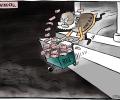
The windfall taxes on domestic crude oil production and fuel exports will generate close to $12 billion (Rs 94,800 crore) for the government in the remainder of the current fiscal while trimming profits of firms such as Reliance Industries Ltd and ONGC, Moody's Investors Service said Tuesday. On July 1, the government imposed windfall gain taxes on the export of petrol, diesel and aviation turbine fuel (ATF), and on the domestic production of crude oil. It has also mandated exporters to meet the requirements of the domestic market first.

In a much-needed relief to cash-strapped airlines, this is the second straight monthly reduction in rates and the biggest single cut ever.
The growth, however, may not indicate a major revival of economic activity.

Strong passenger growth will help domestic airlines improve their top line and margins.
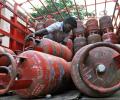
LPG rates were last hiked on November 1 by Rs 2.05 per cylinder. Prior to that rate was hiked on October 28 by Rs 1.5 per cylinder on account of hike in commission paid to dealers.

Given its network and fleet, it has garnered the highest share of passenger growth.

'I would not suggest buying these stocks in the dip, as the upside in profit is dented without a safety net for a rainy day.'

Brokerages lowered their earnings estimates following muted results in Q1FY24. While analysts remain optimistic about the stock's medium-term prospects, they highlight near-term concerns stemming from lower realisations due to changes in the product mix and margin pressures resulting from new plane additions.

Banking services, insurance premium and investment management are likely to cost more.

Global energy supermajor BP plc on Thursday said it is about to open its first 'Jio-bp' branded petrol pump in partnership with Reliance Industries near Mumbai.

Jet fuel constitutes over 40 per cent of an airline's operating costs and the price increase will raise the financial burden on cash-strapped carriers.
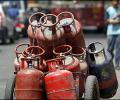
A subsidised 14.2-kg cylinder will now cost Rs 425.06 in Delhi as against Rs 423.09 previously, according to State-owned oil firms

The hike comes on back of over 12 per cent hike on June 15. ATF price on that day were raised by Rs 3,949 to Rs 36,252 per kilolitre in Delhi.

Limits imposed on domestic airfares will be removed from August 31, after a span of approximately 27 months, the Union aviation ministry said on Wednesday. "The decision to remove air fare caps has been taken after careful analysis of daily demand and prices of air turbine fuel (ATF). "Stabilisation has set in and we are certain that the sector is poised for growth in domestic traffic in the near future," Aviation Minister Jyotiraditya Scindia said on Twitter.
Airfares are at an all-time low because of fall in crude oil prices.

Majority of India's international routes have been captured by foreign airlines.

But demand has shown signs of pick up in the last 10 days of April after the government allowed resumption of economic activity beyond the urban municipal limit.
This is three and a half times the loss in the same quarter a year ago.

Average monthly GST collection rose from Rs 90,000 crore during the first year of its implementation -- 2017-2018 -- to Rs 1.68 trillion during 2023-2024, representing an 87 per cent rise.
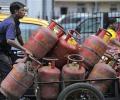
Rates have been on the upswing since October, 2016.

However, the reduction in ATF prices will provide some cushion to airlines engaged in a protracted price war have lost control over pricing in one the world's most price sensitive domestic markets.

The Forbes magazine had adjudged Maran as the 38th richest man in India, with a net worth of $2.3 billion (as of September).

The kerosene subsidy is expected to decline by 40 per cent from Rs 7,595 crore in 2016-17 to Rs 4,500 crore this financial year.
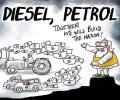
The government on Friday slapped an export tax on petrol, diesel and jet fuel (ATF) while also joining nations like the UK in imposing a windfall tax on crude oil produced locally. A Rs 6 per litre tax on export of petrol and ATF and Rs 13 per litre tax on export of diesel is effective from July 1, finance ministry notifications showed. Additionally, a Rs 23,250 per tonne tax was levied on crude oil produced domestically.

India, the world's third largest energy consumer, has enough petrol, diesel and cooking gas (LPG) in stock to last way beyond the three-week nationwide lockdown, as all plants and supply locations are fully operational, Indian Oil Corp (IOC) chairman Sanjiv Singh said.an Singh, who continued to oversee the mammoth operations of ensuring that fuel reaches every nook and corner despite the loss of his father on the day the 21-day lockdown was declared, said there was no shortage of any fuel in the country and customers should not resort to panic booking of LPG refills.

Attending a function where former Bharatiya Janata Party president Nitin Gadkari rolled out business plan of his Purti Group, NCP president and Union Agriculture Minister Sharad Pawar said "there are no untouchables in politics".

In 2015, India's domestic aviation market clocked 81 million flights.

While scheduled airlines operate flights as per schedules drawn up for several months or even years and are committed to flying during these periods on these routes, an NSOP or a charter operates irregularly and may be planned a short time before a flight.

The public has benefited from this decline in crude oil, which has translated into lower prices of petrol and diesel.

Corporate margins and profits in India remain vulnerable to changes in crude oil prices in the international market. Historical quarterly data from listed companies (excluding banks, finance and insurance, oil and gas, and power sectors) indicate an adverse correlation between corporate margins and crude oil prices.

Four veterans of the Indian National Army, an all-women contingent of the 183-year-old Assam Rifles marching down Rajpath and an Indian Air Force aircraft flying using a mix of traditional and biofuel.

Airlines likely to be allowed to operate with smaller aircraft.

Petroleum Minister Dharmendra Pradhan's wish to levy indirect tax on petrol unlikely to be taken up

Besides urging the Centre for extension of loan moratorium, the hotel and travel industries have also demanded deferment of GST and advance tax payments and waiver of fees for all forthcoming licences and permits.
The new government may also introduce a separate scheme for revival of stranded gas-based power projects

Veterans in the travel industry, a well-known corporate lawyer, and a marquee US-based hedge fund have backed the upcoming low-cost airline Akasa Air. Founded by former Jet Airways chief executive officer (CEO) Vinay Dube, the venture counts ace stock trader and investor Rakesh Jhunjhunwala as its biggest financial backer with an investment of around Rs 300 crore. A person with knowledge of the development said most of the people were well known to Jhunjhunwala and Dube, who approached them during the conception stage.

Perhaps for the first time, petrol in India costs more than the superior jet fuel (ATF) used in aeroplanes, as the government has levied a record excise duty on the fuel used in two-wheelers and cars.

A consortium led by Ajay Singh is initially expected to invest Rs 1,200 cr, largely to cover liabilities.

The government is expecting to connect small towns with main metros through its Regional Connectivity Scheme

ATF for domestic carriers has become 11.22 per cent cheaper since October and is expected to see more price cuts in the next three months.
